Is It OK to Give Second-Hand Gifts? What the Research Says
Yes, it's OK to give second-hand gifts. Research suggests recipients are more open to them than givers expect, and most people say they'd be happy to receive one. The rules are simple: choose something in excellent condition that suits the person, avoid intimate items like underwear, and present it with as much care as anything new.
What does the research say about second-hand gifts?
The gap is between givers and receivers. In a 2025 paper for the European Marketing Academy, Schöniger, Adler, Weidenhagen and Ulber ran four studies and found that people's reluctance to give second-hand comes from fear of offending — while receivers are more open to second-hand gifts than givers assume. A separate study by Qiu and Lu reached the same conclusion: givers over-avoid used gifts, paying more attention to whether a gift is new than receivers do, and less to whether it matches the receiver's taste.
Surveys point the same way. A YouGov poll of 1,964 British adults in December 2024 found that 55% would be pleased to receive a second-hand Christmas gift and only 14% would be unhappy. Among 18 to 24-year-olds the figure was 74%, against 46% of over-55s.
Why a second-hand gift can be the better gift
- Taste beats newness. The research suggests receivers care more about whether a gift suits them than whether it's new — and second-hand widens what you can find.
- It can be one of a kind. A vintage piece nobody else will open on Christmas morning.
- Better quality for the budget. The same money buys a well-made wool coat or leather bag instead of a fast-fashion version.
- It's lower impact. Nothing new has to be made, shipped or packaged.
What makes a good second-hand gift?
- Excellent condition: clean, complete, nothing to apologise for — the same standard as what's worth swapping.
- Something they'd choose themselves. You're giving taste, so give theirs.
- Accessories over sized clothing when you're unsure — scarves, bags, belts and jewellery don't depend on fit. If you do give clothes, check the size carefully.
- A story. Where it's from and why you chose it makes a second-hand gift feel more personal than a new one.
- For designer pieces, proof that it's genuine — authenticate it before you wrap it.
What not to give second-hand
- Underwear and swimwear, unless new with tags.
- Opened cosmetics and fragrance.
- Anything worn out, stained or in need of repair.
- Counterfeits, however convincing.
- Anything you'd want to explain or apologise for when it's opened.
How to give a second-hand gift
- Clean it properly, following the care label, and press or steam it — here's how to care for clothes.
- Remove old price stickers and tags, or keep an original tag if it's part of the story.
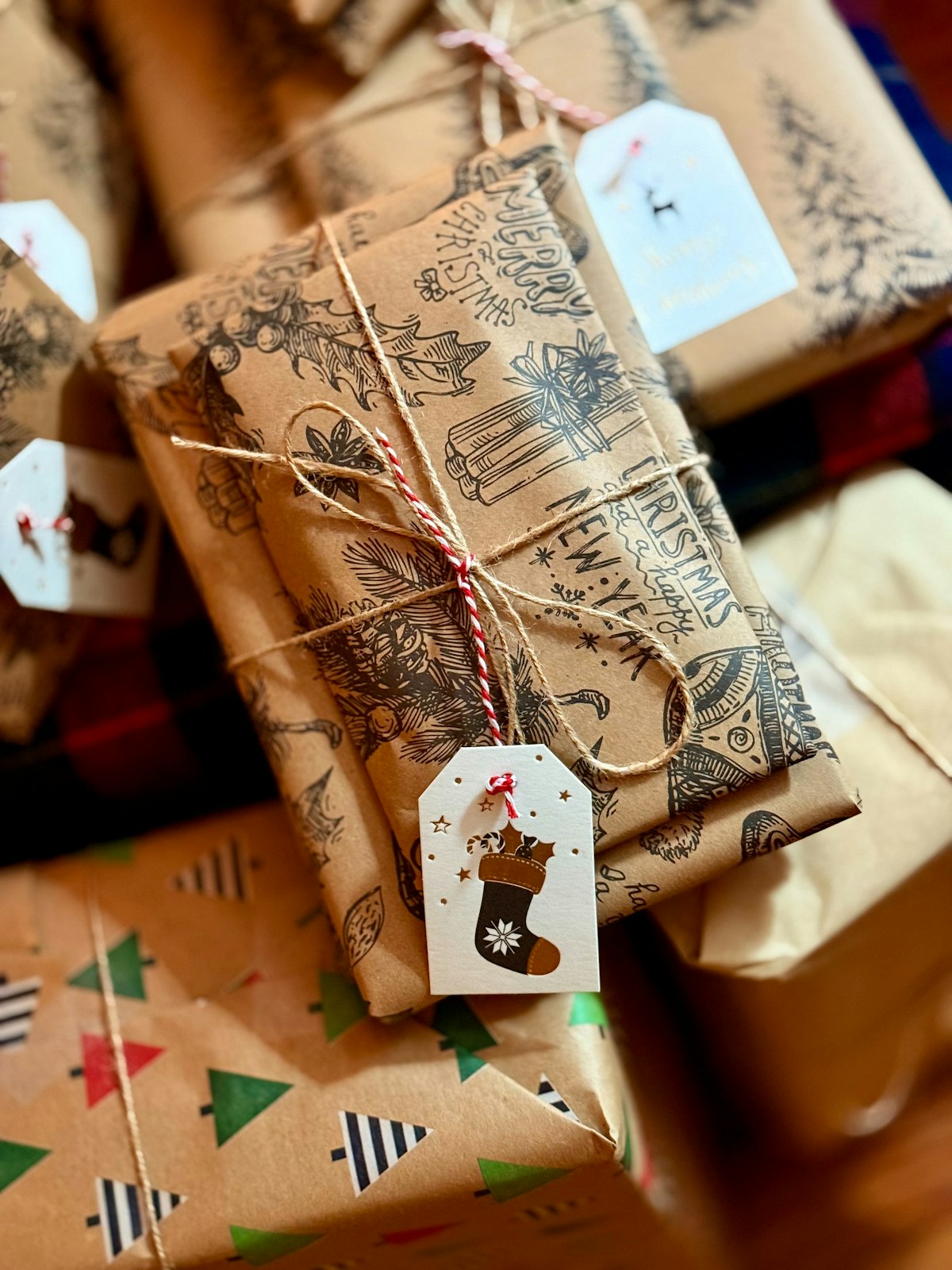
- Wrap it well. Fabric wraps and good paper make anything feel considered.
- Add a note about where it's from and why you chose it.
- Offer an easy out: if it doesn't fit or suit, they can swap it on.
Should you tell someone a gift is second-hand?
That's up to you, and it depends on the person. The 2025 study found givers were more comfortable giving second-hand when the receiver wouldn't know — but also when the receiver already buys second-hand themselves, which makes honesty easy. For a good piece chosen with care, telling the story is usually part of the gift.
Second-hand Christmas gift ideas
- A vintage knit or cardigan in a colour they love.
- A silk scarf.
- A leather bag or belt that's been looked after.
- A good wool coat, if you know their size.
- A piece of jewellery with a bit of history.
- A designer piece, checked and authenticated.
- The piece from your own wardrobe they've always admired — or borrowed three times.
“A second-hand gift says you looked for the right thing, not just the new thing.”
— The Bestis Editors
Frequently asked questions
Is it rude to give a second-hand gift?
No. Research suggests receivers are more open to second-hand gifts than givers expect, and a YouGov poll in December 2024 found 55% of Britons would be pleased to receive one. Condition and fit with the person's taste matter far more than whether it's new.
Should you tell someone their gift is second-hand?
It's up to you. Many people do, and it's easiest when the recipient already buys second-hand. Sharing where it's from often makes the gift feel more personal.
What second-hand items make good gifts?
Pieces in excellent condition that match the person's taste: vintage knitwear, silk scarves, leather bags and belts, jewellery, well-made coats and authenticated designer pieces.
What should you never give second-hand?
Underwear and swimwear unless new with tags, opened cosmetics or fragrance, counterfeits, and anything worn out, stained or needing repair.
Are younger people more open to second-hand gifts?
In YouGov's December 2024 poll, 74% of 18 to 24-year-olds said they'd be happy to receive a second-hand Christmas gift, compared with 46% of over-55s.
Is it okay to give clothes from your own wardrobe as a gift?
Yes, if it's something the person has admired and it's in excellent condition. Clean and press it, wrap it properly, and tell them why you want them to have it.
Sources
- Schöniger, Adler, Weidenhagen and Ulber, The acceptance of second-hand products as a gift, European Marketing Academy (2025).
- Qiu and Lu, Gift givers over-avoid sending used gifts.
- YouGov, Merry Thriftmas: are Britons happy to receive second-hand gifts? (December 2024).
On Bestis, the best gift idea is often already in your circle's history — the jacket a friend has borrowed three times, the bag they keep asking about. And if you'd love something pre-loved yourself this year, a swap with your circle gets you there without anyone buying new.
Start swapping your style
Bestis is the private network where you swap, borrow and sell with the people you trust.