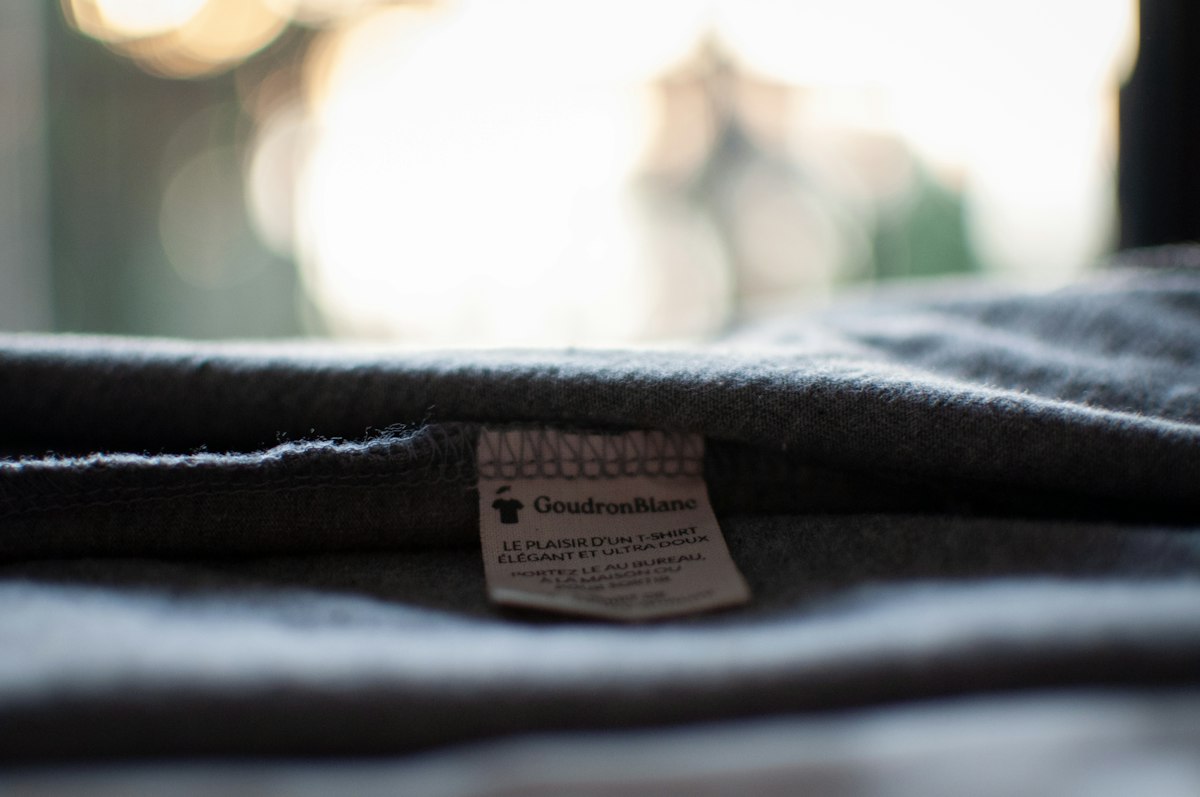
How to Tell If Clothing Is Vintage: The Label Clues That Date It
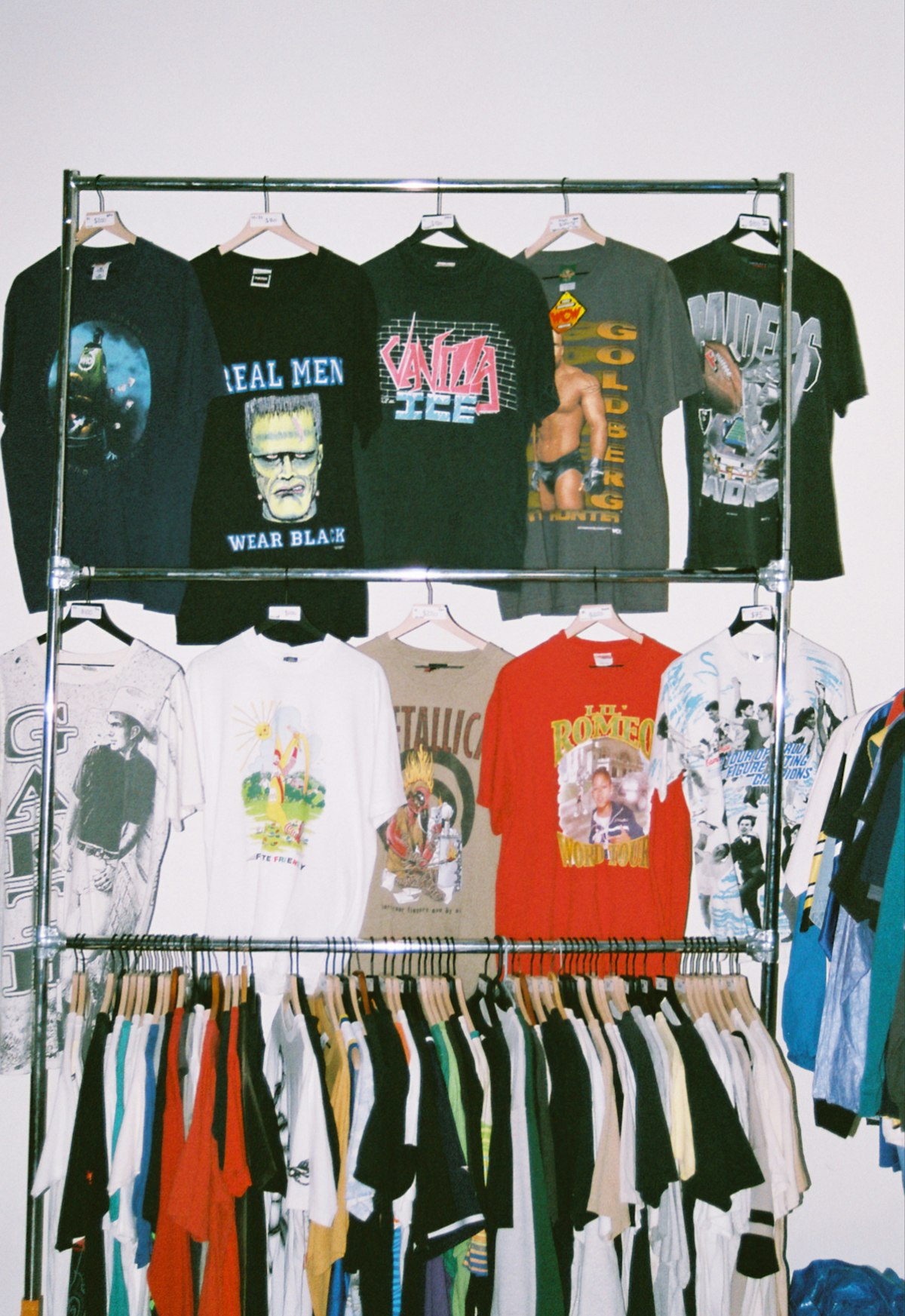
To tell if clothing is vintage, start with the label. A union label, a long-gone brand logo or a missing care label all point to an older piece, while a ZIP code or an RN number tells you the earliest it can have been made. Then check the construction, the fabric and the fit, and trust several clues that agree rather than any single one.
Most of the dating clues below come from US labelling rules, so they work best on American-made clothing. There's a section on British pieces further down.
When is clothing considered vintage?
There's no legal definition, but most dealers call clothing vintage once it's at least 20 years old. Antique usually means 100 years or more. Retro, or vintage-style, means new clothing made to look like an older era — which is exactly what the clues below help you rule out.
The short version
- Look for a care label. US clothing has needed one since 1972.
- Check any address for a ZIP code. ZIP codes date from 1963.
- Find the RN number and look it up. It names the maker and dates from 1959 at the earliest.
- Look for a union label, which can set a latest date.
- Read where it was made. Some countries no longer exist.
- Compare the brand label with the brand's history.
- Check the construction, fabric and fit, as supporting evidence.
1. Is there a care label?
The US Federal Trade Commission adopted its Care Labeling Rule in December 1971, and it came into force on 3 July 1972. From then on, clothing sold in the US had to carry care instructions. A US-made garment with no care label at all may well predate the rule — but labels get cut out, and clothing made for other markets followed other rules, so treat this as a strong hint rather than proof.
2. Is there a ZIP code?
ZIP codes were introduced on 1 July 1963, along with two-letter state abbreviations such as NY and CA. A ZIP code or a two-letter state in the address on a label means the label was made in 1963 or later. A missing ZIP code is only a hint, not proof of an earlier date: the codes weren't compulsory at first, and plenty of firms kept printing their old labels.
3. What does the RN number tell you?
An RN — Registered Identification Number — is issued by the FTC to US businesses that make, import or sell textile products, under a rule that dates back to 1959. You can look one up in the FTC's database at rn.ftc.gov to find the company behind a label. Two cautions: an RN dates the company's registration, not the garment, and companies keep their number for decades. So an RN tells you the piece is from 1959 or later and who made it — the rest has to come from other clues.
4. Is there a union label?
Union labels can set a latest possible date. The International Ladies' Garment Workers' Union, whose label appears in a great deal of American womenswear, merged with the Amalgamated Clothing and Textile Workers Union in 1995 to form UNITE, so an ILGWU label means the garment was made before then. The Amalgamated Clothing Workers of America, common in menswear, had itself merged into that union in 1976, so an ACWA label points earlier still.

5. Where was it made?
A country of origin that no longer exists is one of the clearest clues there is. Made in West Germany means before German reunification in 1990; Made in USSR means before the Soviet Union dissolved at the end of 1991. More broadly, where a brand made its clothes changed over the decades, so the country on the label can be checked against the brand's history.
6. Does the brand label match the brand's history?
Brands redesign their labels, change their logos and drop names altogether. Comparing a label with the brand's known labels — collectors' guides and label databases are good for this — can narrow a piece to a decade or two. Watch for anniversary and reissue ranges that deliberately copy old labels.
7. Check the construction, fabric and fit
- Construction: generous seam allowances, hand-finished hems and careful finishing are common in older garments. They support a date; they don't set one.
- Zips: a metal zip is consistent with an older piece, but metal zips are still made today.
- Fabric: read the fibre content and feel the cloth — knowing your fabrics helps here.
- Fit: vintage sizes usually run smaller than the same number today, so measure rather than trust the label.
“One clue is a hint. Three clues that agree are a date.”
— The Bestis Editors
How to tell if clothes are vintage in the UK
British clothing doesn't carry RN numbers or ZIP codes, so the brand clues matter more. The best-known example is St Michael, Marks & Spencer's own label: M&S dropped the name in 2000, so a St Michael label usually means an earlier piece — though M&S revived the name in 2021, so check the style and other clues too. The Vintage Fashion Guild's label resource is a good place to compare labels.
Is it really vintage, or vintage-style?
Reproductions copy the look of an era; they rarely copy every label detail as well. Use several clues together, be wary of labels that have been removed, and for anything valuable or designer, authenticate it properly before you trade.
Frequently asked questions
How old does clothing have to be to be vintage?
Most dealers call clothing vintage once it's at least 20 years old. Antique usually means 100 years or more, and retro means new clothing made in an older style. None of these is a legal definition.
How do you date clothing by its RN number?
Look the number up in the FTC's database at rn.ftc.gov to find the company. The RN dates the company's registration rather than the garment, so it tells you the piece is from 1959 or later and who made it; other clues narrow it down.
Do vintage clothes have care labels?
Clothing sold in the US has needed care instructions since 3 July 1972, so a US-made garment without one may be older. Labels are sometimes cut out, though, and other countries had different rules.
What does a union label on clothing mean?
It shows the garment was made by union workers. In the US, an ILGWU label means it was made before the union's 1995 merger, and an ACWA label means before 1976, so union labels help set a latest date.
How can you tell if vintage clothing is a reproduction?
Check several clues together: care labels, addresses, RN numbers, union labels, fabric and construction. Reproductions copy an era's look but rarely get every label detail right.
What is the difference between vintage and retro?
Vintage clothing was made in an earlier era, usually at least 20 years ago. Retro clothing is new, made to look like it came from an earlier era.
Sources
- Federal Register notice on the Care Labeling Rule, including its 1971 adoption (2000).
- FTC trade regulation rule: care labeling of textile wearing apparel, effective 3 July 1972.
- 16 CFR 303.20, Registered identification numbers, and the FTC RN database.
- HISTORY: the US Post Office introduces ZIP codes, 1 July 1963.
- Kheel Center, Cornell University: the ILGWU's 1995 merger.
- Vintage Fashion Guild: St Michael label resource.
On Bestis, a vintage piece earns its place in the vault with its story attached — record the era and the label clues alongside the photos, and swap it within circles who'll appreciate exactly what it is.
Start swapping your style
Bestis is the private network where you swap, borrow and sell with the people you trust.