What "Sustainable" Actually Means on a Clothing Label
Walk through any high street and you'll pass a dozen rails labelled conscious, responsible, eco, green or committed. Almost none of those words mean anything in particular. Most aren't regulated, none require proof, and a garment can carry every one of them while being made exactly the way everything beside it was made.
This isn't an argument for cynicism. Some claims are real and worth paying attention to. It's an argument for knowing which is which, which takes about five minutes to learn and then works forever.
The words that mean nothing
Start here, because it clears most of the shelf. These terms have no legal definition in fashion, no standard behind them and no audit attached:
- Eco, eco-friendly, green — unregulated entirely.
- Conscious, responsible, mindful, considered — brand vocabulary, not claims.
- Natural — cotton is natural and is among the most water-intensive crops grown.
- Vegan — means no animal material. Very often means plastic.
- Carbon neutral — usually means offsets bought, not emissions avoided. Ask which, and most labels can't tell you.
- Made with recycled materials — the phrase made with does a lot of hiding. Five per cent qualifies.
“If a claim doesn't say how much, of what, verified by whom, it isn't a claim. It's decoration.”
— The Bestis Editors
The ones that carry weight
Certifications are different, because somebody has to check. They're not perfect and they cost brands money to obtain, which is precisely why they're harder to fake:
- GOTS (Global Organic Textile Standard) — organic fibre content plus environmental and labour criteria through the whole supply chain. The strongest general-purpose mark you'll see.
- OEKO-TEX Standard 100 — tested for harmful substances in the finished garment. Says nothing about the environment or workers, but what it does say is verified.
- Global Recycled Standard — verifies recycled content and tracks it through production, rather than taking a factory's word for it.
- Fairtrade and Fair Wear — focused on the people making the clothes, which most eco claims quietly skip.
- bluesign — governs chemical inputs and water in manufacturing. Rare, and meaningful when present.
You don't have to memorise them. Just notice the difference in kind: one list is adjectives, the other is organisations that can withdraw a certificate.

Read the sewn-in label instead
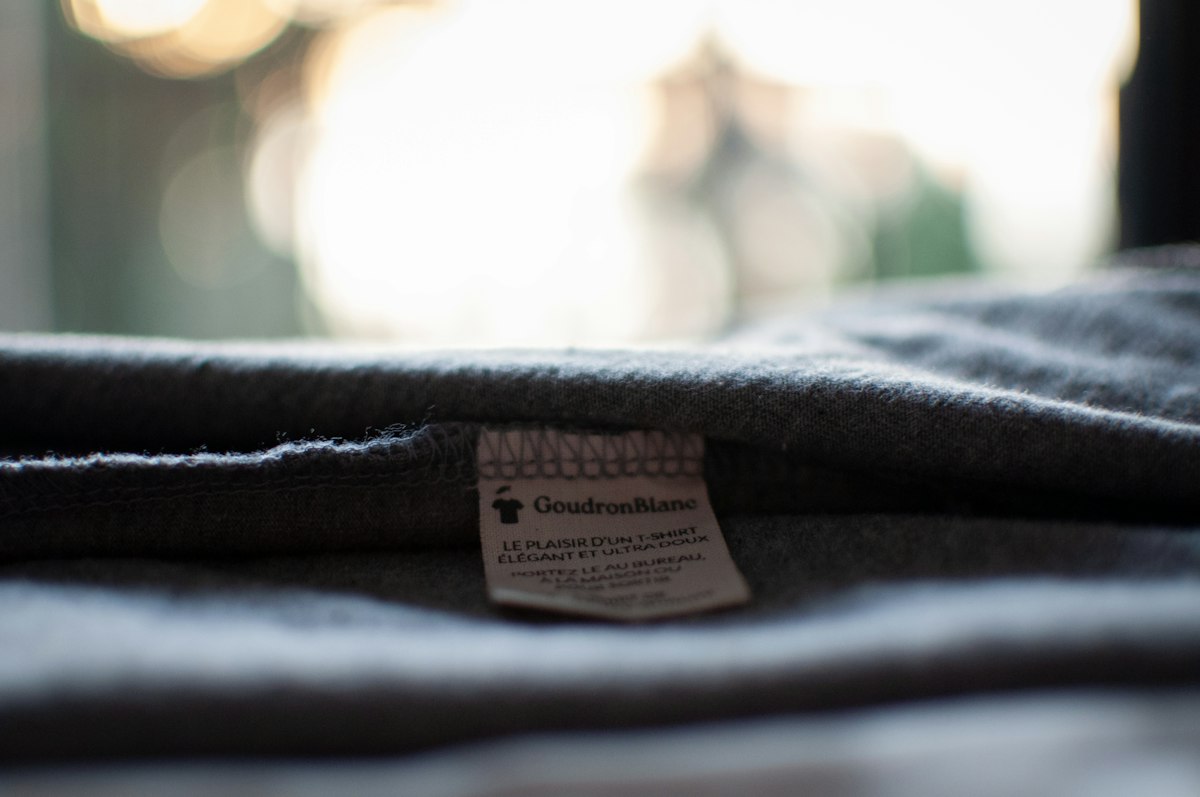
The hangtag is written by a marketing team. The little label sewn into the side seam is written to comply with the law, and it's where the actual information lives — fibre composition, country of manufacture, care instructions.
Composition tells you how long the garment will last and how it will wash. Country of manufacture tells you something about distance and, loosely, about labour conditions. Care instructions tell you what you're signing up for, and dry clean only on a thing you'll wear weekly is a claim about your future far more than anything on the swing tag.
The question that cuts through all of it
There's a single question that makes most of this unnecessary: how many times will this be worn, and by how many people?
Roughly the entire environmental footprint of a garment is set before it reaches a shop — growing or synthesising the fibre, spinning, dyeing, finishing, shipping. That cost is paid once, at manufacture, whatever the label says. It gets divided by every wear the garment eventually has.
Which means a conventionally-made jumper worn three hundred times across two owners has a far better record than an organic certified one worn eight times. The certification is real and it matters at the point of production. It just can't compete with wear count, because nothing can.
The greenest garment is the one that exists
Follow that logic and it lands somewhere slightly awkward for everyone selling sustainable clothing: the lowest-impact thing you can wear this year is something already made. Its footprint is spent. Wearing it adds a wash and nothing else.
That's not a reason to never buy anything new — things wear out, and brands doing genuinely better work deserve the custom. It's a reason to make new the second option rather than the first, and to be unembarrassed about it.
Swapping is that logic taken to its conclusion. Nothing is manufactured, nothing is shipped across an ocean, and a garment that had stopped being worn starts again. No hangtag required, and no adjective on earth beats the arithmetic.
Start swapping your style
Bestis is the private network where you swap, borrow and sell with the people you trust.