The Work Wardrobe You Don't Have to Buy: Dressing for a New Job Secondhand
There's a particular weekend almost everyone has before starting a new job: the one spent buying a work wardrobe from scratch, in a hurry, for an office you haven't seen yet. It's among the most expensive shopping people ever do, and a lot of what comes home that weekend barely gets worn.
Not because it's bad, but because it was bought for an imagined workplace. The real one turns out to be more relaxed, or more formal, or simply different — and by week three you're wearing the same four things while the rest hangs there, still creased from the bag.
Wait a fortnight
The most useful thing you can do is buy almost nothing before you start. Turn up on day one in the safest version of what you already own — a little smarter than you think you need to be — and spend two weeks watching.
A dress code as written and a dress code as practised are rarely the same thing. Look at what people a year or two ahead of you actually wear, what changes on days with clients or senior people around, and what changes on a Friday. Two weeks of observation is worth more than any guide, including this one.
What the dress codes usually mean
With that caveat — every workplace bends these — here's the rough shape of each:
- Formal or business: a suit, or trousers or a skirt with a matching jacket, and a shirt or blouse. Structured, dark, conservative.
- Business casual: a blazer or a smart knit, trousers or a skirt, proper shoes. Usually no jeans, though many offices quietly allow dark ones.
- Smart casual: dark jeans are fine, a blazer is optional, clean simple trainers often pass. Neat matters more than formal.
- Casual: anything tidy. Which sounds easy, and is the one where people most often get it slightly wrong on day one.

Separates beat suits
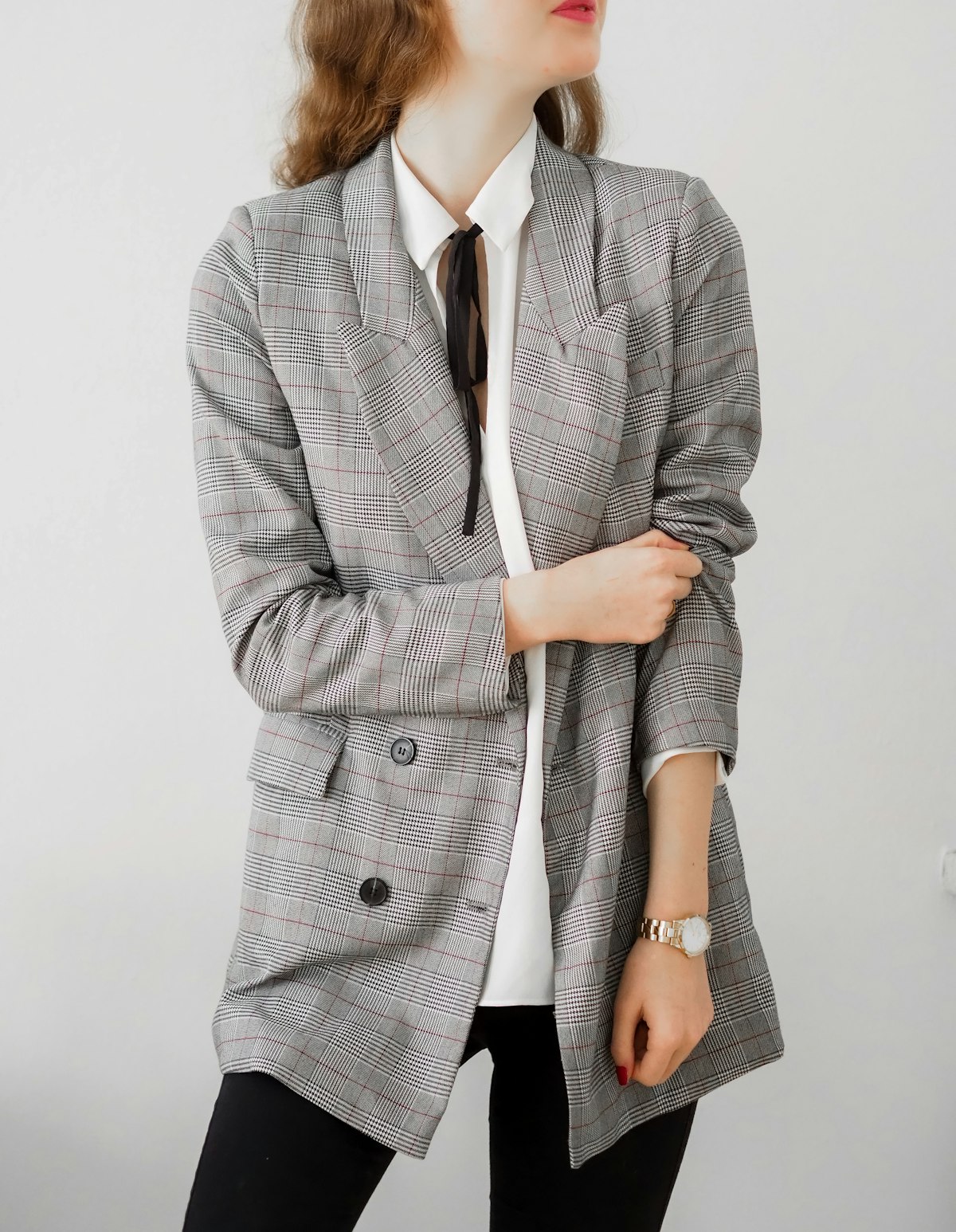
A suit is one outfit. A jacket and trousers that each work on their own are the beginning of several. The most valuable single piece in almost any work wardrobe is a blazer that looks right with smart trousers on Monday and with dark jeans on Friday — it moves between dress codes, and it quietly makes everything underneath it look more considered.
Once you're thinking in separates, keep the palette tight — a couple of neutrals that all go together — so every top works with every bottom and a small wardrobe produces a lot of different days.
The small core
Once you know what the place actually wears, this covers a working week in most offices, with room to spare:
- Two pairs of trousers or skirts in neutrals that go with everything else.
- Four or five tops — shirts, blouses, fine knits or plain tees, depending on the dress code.
- One blazer or structured jacket that works over all of them.
- One knit layer for over-air-conditioned offices, which is most of them.
- One pair of shoes you can genuinely stand, walk and commute in all day.
“Dress for the job you've actually got. You can see it by the second week.”
— The Bestis Editors
Why workwear is better secondhand
Tailored clothing is among the most under-worn clothing there is. People change jobs, go remote, change size, or discover their new office is more relaxed than they feared — and a blazer or suit trousers bought for one role end up hanging, barely worn, for years. That makes secondhand workwear unusually good: the pieces are often close to new, and they're the structured, well-made things that cost the most when bought fresh.
The one thing to check carefully is the shoulders on anything with a jacket. Hems and waists can be adjusted cheaply; shoulders can't.
Borrow the one-offs
Then there are the occasions: the interview suit, the conference, the client dinner, the awards night someone invited you to in your second month. These are exactly the pieces you'll wear once or twice a year, and exactly the ones worth borrowing rather than buying.
When the job changes, move the wardrobe on
Work wardrobes go out of date without wearing out. Change jobs, change sector, or go hybrid, and a rail of perfectly good formal clothing becomes something you walk past every morning.
That's when it should move on — to someone just starting out, standing where you stood, about to spend a weekend panic-buying. On Bestis you can swap the workwear your job no longer needs for the pieces your new one does, and borrow the interview suit for the week you need it. Start the job, watch for a fortnight, and build the rest from what already exists.
Start swapping your style
Bestis is the private network where you swap, borrow and sell with the people you trust.