The Denim Decoder: How to Find Secondhand Jeans That Actually Fit
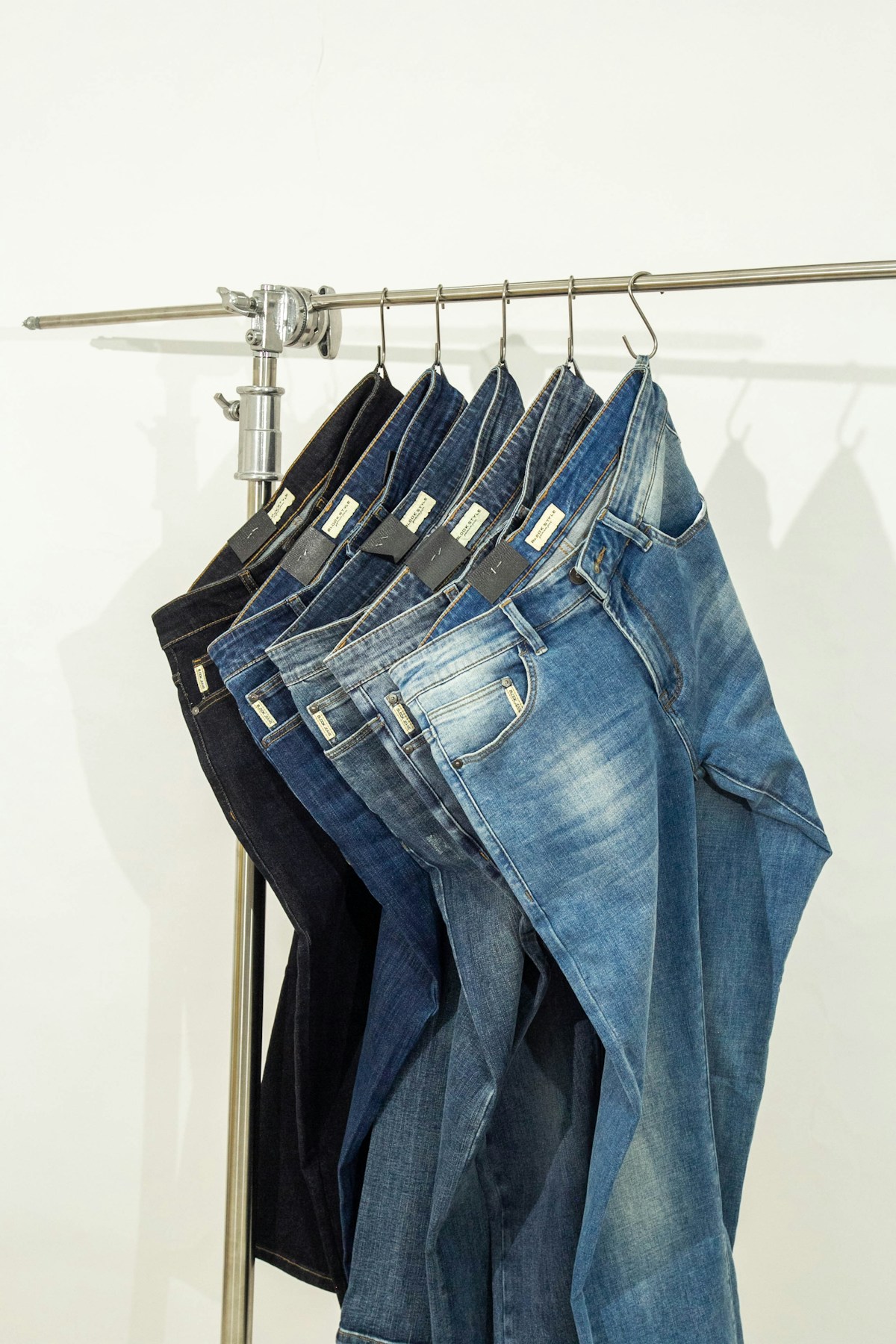
Denim is the most swapped, resold and passed-on category there is, and also the one people get wrong most often. That's not a coincidence. Jeans are the item where the number on the label tells you the least — a 28 from one brand is a 30 from another, and a 28 from the same brand five years ago is neither.
The good news is that denim is also the most measurable thing in your wardrobe. Four numbers and a fabric composition will tell you more than any size label, and both are easy to get before you commit to anything.
Find your reference pair
Go and get the jeans you actually wear — the ones you reach for without thinking. That pair is your ruler, and it's more accurate than anything you'd measure on yourself.
Lay them flat, buttoned, smoothed out, and take four measurements:
- Waist — straight across the top of the waistband, edge to edge. Double it. That's the waist measurement, and it's the one that decides whether you can do them up.
- Rise — from the top of the waistband at the front down to the crotch seam. This is the number that decides whether they feel like your jeans or somebody else's.
- Thigh — straight across, about an inch below the crotch seam. The usual culprit when the waist fits and the legs don't.
- Inseam — crotch seam straight down the inside leg to the hem. Decides where they break on your shoe.
Write them down. You now have a denim fingerprint that works across every brand, every decade and every seller, which no size label has ever managed.
Read the fabric before the fit
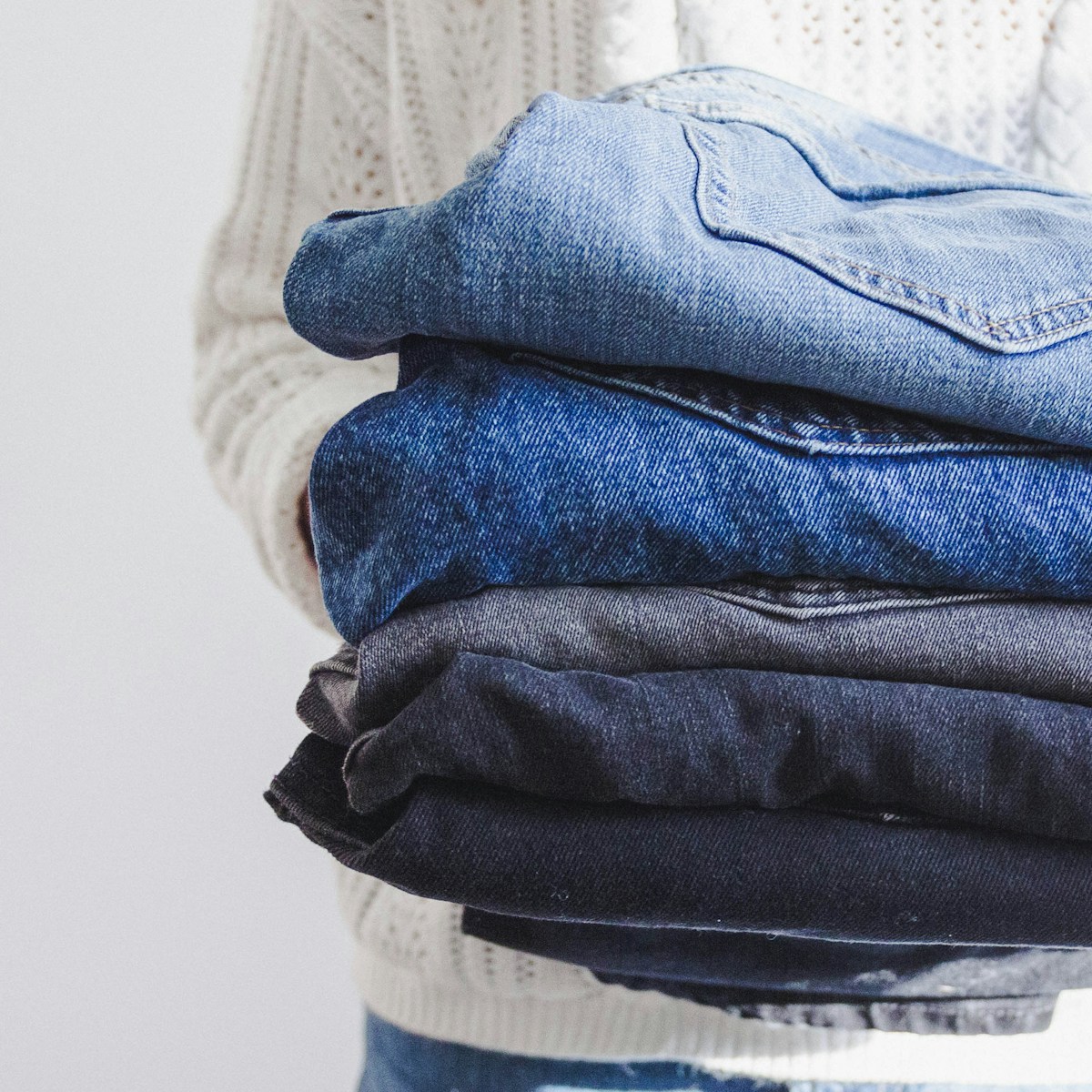
Look at the composition label, because it changes what the measurements mean. One hundred percent cotton — rigid denim — will not give. What you measure is what you get, and it will mould to you over months rather than minutes. A couple of percent elastane behaves completely differently: it stretches to fit on day one and relaxes about half a size through the day, so a pair that feels perfect in the morning can feel loose by evening.
Neither is better. But if you're used to stretch denim and you take home a rigid pair in the same measurements, it will feel wrong, and you'll conclude the sizing was off when the fabric was doing exactly what it says.
“Rigid denim fits you eventually. Stretch denim fits you immediately and then keeps moving. Know which one you're agreeing to.”
— The Bestis Editors
What to check on a used pair
Denim wears honestly, which makes it easy to inspect. A few minutes of looking tells you how much life is left:
- Inner thigh — hold it up to the light. Thinning here is how jeans fail, and once the weave goes translucent the countdown has started.
- Back pocket corners and the seat — the other place wear shows first.
- Hardware — the button should sit firm, the zip should run without catching. Both are repairable, but you want to know before, not after.
- Hems — a shortened pair is fine, but check whether the original hem was cut off. It caps how much length you can ever get back.
- Knees — soft, faded knees mean the shape has already been set by somebody else's legs. Sometimes charming, sometimes just baggy.
The rise question
If jeans ever feel subtly wrong in a way you can't name, it's almost always the rise. It decides where the waistband sits, how long your legs read, and what tops work with them. A high rise and a mid rise in identical measurements are two different garments and they suit two different sets of tops.
It's also the number people never think to ask about, which is why it's worth asking. One measurement, taken in ten seconds, and it removes most of the guesswork.
Why denim is worth swapping rather than buying
Jeans are among the most resource-hungry things in a wardrobe to make, and among the most durable once made. A well-kept pair has years in it after the first owner is bored — which is the exact shape of garment that should be changing hands rather than being manufactured again.
It's also the category where swapping beats shopping on pure odds. The pair that fits you was made in a year, a cut and a wash that may not be in shops now, and somebody near you is probably done with it.
On Bestis, ask for the four measurements and the composition before you commit — most people are happy to take them, and a seller who has them ready is a seller who knows their denim. Swap with the people whose taste you already trust, and let the jeans you've grown out of go and fit somebody else properly.
Start swapping your style
Bestis is the private network where you swap, borrow and sell with the people you trust.